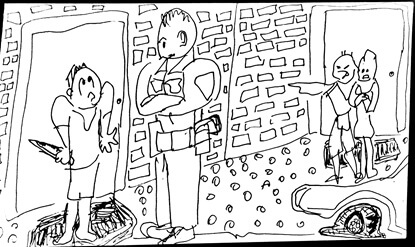
An adult follows strict rules of behavior.
Rule 1. Do what we already know.
Rule 2. Unless we are talented, don't sing in public.
Rule 3. Run only on a path or treadmill.
Rule 4. Display only commerically viable art.
Rule 5. Don't let people see our mistakes (see Rule 1).
Rule 6. Learning is painful, showing off is better (see Rule 5).
Who makes the rules, anyways!
Forget playing is joy. Forget moving. Forget singing. Forget muscle memory and sounds and sharpening the ear to melody. Forget dancing, running, jumping, forget getting air forget getting blood forget feeling drums forget music. Forget writing, drawing, thinking. And making mistakes embarrassing and we'll never mix up stuff again. And nothing to show off, nothing.
We replace all that with discipline!
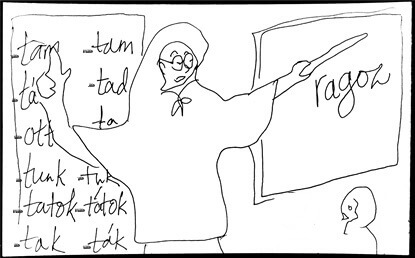
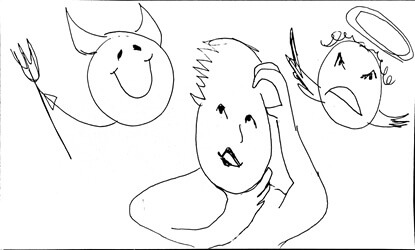
Let us play school. Be dolls. Be motionless. Be animals. Be obedient.
Teach your pet what we have learned. The last thing we ourselves learned was the conjugation of "tetet" and "tettet." Well, what do we know about those words?
Not much. We have to look at them deeper in order to teach them to someone else.
Ok, take a look at them. What do we find out?
Both words have the root ("te-").
The dictionary form for "te-" is "tesz" (does, puts). It is an irregular verb.
So let's use materials regarding the word "tesz" from Hunfun.hu (fucking inactive Patreon site). Let's draw pictures and explain what we are learning!
Lesson forty-six: Hungarian for cats (Day 1)
The challenge is to explain the Hungarian language to a cat who has no prior knowledge of the language, using random sentences.
The hunfun material includes a list of 136 example sentences illustrating various uses of "tesz." We will not use the order in which the sentences are presented in the material. We will instead shuffle the sentences randomly.
Why?
Because real teaching involves unexpected feedback from students. So the randomness simulates unexpected questions and situations.
So the first step to teaching is to see if we understand each sentence. We use a stupidly simple way to check if we understand a sentence: We check how easy it is to memorize that sentence.
It is boring to memorize something. But the threat of being unable to present material as a teacher motivates us to practice it. And we have rule number 6 to follow. We have to look smarter than we actually are.
In the process of memorizing, we occassionally dig into the vocabulary and grammar; it is much easier to memorize something when there is an emotional relationship or an interesting discovery.
It takes a long time to explain the 136 sentences. At an average of three minutes per sentence, that is almost seven hours. Cats are patient, they can sit in front of a mouse hole or empty food dish for hours.
But for someone who does not have the attention span of a cat, the recording of the lesson is broken into 136 pieces.
Here it is! I took the audio clips and sentences from the hunfun Patreon site. I am rather fond of my drawings, I hope they are useful.
************************************************
0. Intro
************************************************
1. Card 110
Hungarian
A kisgyerekek még nem képesek különbséget tenni az udvariasság és a kedvesség között.
English
Young children are not yet able to differentiate between politeness and kindness.
************************************************
2. Card 029
Hungarian
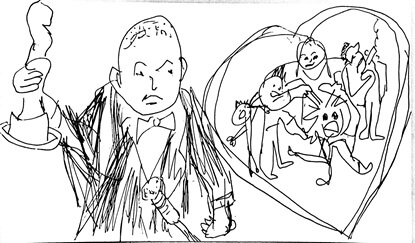
Az anyja a lelkét is kiteszi érte, de a fiát kicsit sem érdekli.
English
His mother puts her heart and soul into everything for him, but he doesn't care in the slightest.
************************************************
3. Card 048
Hungarian
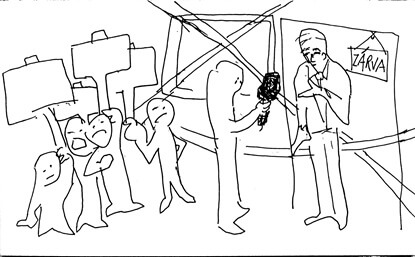
A cég hivatalos közleményt tett közzé.
English
The company issued an official statement.
************************************************
4. Card 126
Hungarian
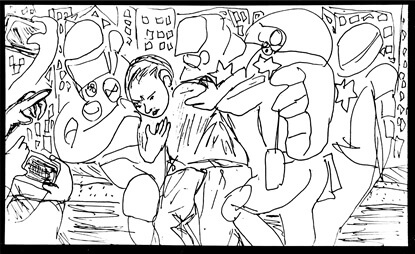
Ezt nem tehetik!
English
They can’t do this!
************************************************
5. Card 051
Hungarian
Recept:
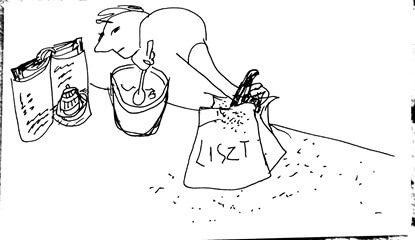
Keverjük fel, majd tegyünk hozzá fél kiló lisztet!
English
Recipe:
Stir it, then add half a kilogramm flour to it.
************************************************
6. Card 030
Hungarian
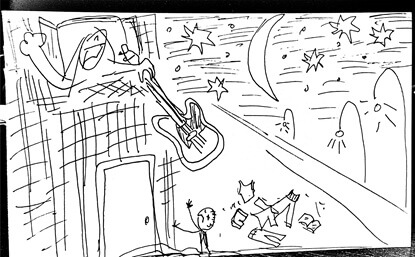
Miután Mari megtudta, hogy Józsi megcsalta, még aznap este kitette a szűrét.
English
When Mari found out Józsi had cheated on her, she gave him the boot that same night.
************************************************
7. Card 120
Hungarian
Magyar tanár a diákjának:
Tedd az igét múlt időbe!
English
Hungarian teacher to his student:
Put the verb in the past tense!
************************************************
8. Card 052
Hungarian
Szerintem jó döntés volt megválni Andrástól, bár hozzáteszem, hogy én sosem kedveltem.
English
I think letting András go was a good decision, although I should add that I never really liked him.
************************************************
9. Card 124
Hungarian
Nem tehetek róla!
English
It’s not my fault!
************************************************
10. Card 134
Hungarian
Három órával a robbantások után sikeresen elfogták a tetteseket.
English
The perpetrators were successfully captured three hours after the bombings.
************************************************
11. Card 004
Hungarian
Mit tegyek?
English
What should I do?
************************************************
12. Card 097
Hungarian
A beszédében többször is említést tett a családjáról.
English
In his speech, he made several mentions of his family.
************************************************
13. Card 087
Hungarian
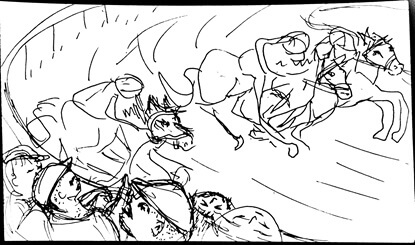
Melyik lóra tettél?
English
Which horse did you bet on?
************************************************
14. Card 017
Hungarian
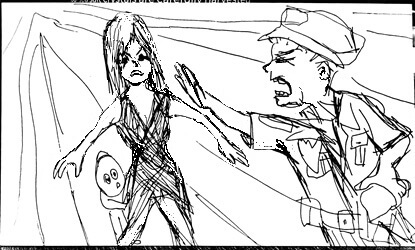
A rendőr kiabálja:
Tegye fel a kezét!
English
The police officer shouts:
Put your hands up!
************************************************
15. Card 085
Hungarian
A szomszédom feljelentést tett ellenem, mert kiszúrtam a kerekét.
English
My neighbor made a report against me for slashing his tire.
************************************************